There is a categorization mistake quietly costing brands real money: too many teams treat their…
Whether you’re a marketer looking to foray into the world of influencer marketing for B2B or you’d like to beef up your current strategy, we can help.

Whether you’re a marketer looking to foray into the world of influencer marketing for B2B or you’d like to beef up your current strategy, we can help.
B2B buyers don’t trust ads. They trust people. And the most efficient way to earn that trust at scale? Influencer marketing—done strategically.
The days of treating influencer marketing as a “nice-to-have” are over. Today’s B2B leaders are building influencer programs into the core of their demand gen, thought leadership, and ABM playbooks. And the results are real: higher trust, lower CAC, and content that moves people and pipeline.
This isn’t B2C tactics in a blazer. This is how modern B2B companies are leveraging trusted voices to drive awareness, education, and conversions—across industries, platforms, and funnel stages.
In this guide, you’ll learn:
What influencer marketing actually means in a B2B context (hint: it’s more than just execs on LinkedIn)
How to build a full-funnel campaign—from strategy to selection to amplification
Which content formats, platforms, and paid strategies deliver measurable results
How brands in tech, CPG, SaaS, and legacy manufacturing are driving 5-figure conversions, 10x CTRs, and content libraries that fuel multiple teams
What the latest reports from Ogilvy, TopRank, and MarTech say about the future of B2B influence
You’ll walk away with a clear playbook you can use—whether you’re just exploring B2B influencer campaigns or ready to scale an always-on program.
What this is: A modern, data-backed playbook for B2B marketers who want to use influencer marketing to drive real business outcomes—not just engagement.
Why now: B2B influence is no longer experimental. 91% of B2B purchases are impacted by influencers, and always-on programs are 17x more effective than one-off campaigns.
What you’ll learn: How to build full-funnel campaigns, pick the right creators, structure content by platform + KPI, and replicate the results that other high-performing B2B brands are seeing right now.
Good news: It’s not just executives posting on LinkedIn.
If you think B2B influencer marketing means tapping a few “thought leaders” to drop a quote in your blog post… you’re working with a 2018 playbook.
B2B influence has matured—and diversified. Today, it spans across creators, SMEs, internal talent, analysts, even customers. What they have in common isn’t a job title. It’s influence over a buying decision. And in B2B, those decisions are rarely made alone.
Influencer marketing in this space isn’t about who’s loudest—it’s about who’s trusted. That includes:
A product engineer who quietly runs a YouTube channel for factory owners
A mid-level manager breaking down SaaS pricing models in TikToks
An operations lead who gets 400 comments every time they post on LinkedIn
A customer who advocates for your solution on a panel without being paid to
These are the people your buyers listen to before they buy.
Yes, and probably better than you think.
Influencer marketing in B2B isn’t just a brand awareness play anymore. When built right, it drives qualified traffic, fills pipeline, and converts decision-makers. Let’s cut to the data:
Here’s how it works when done right:
Engine, a travel-tech brand, ran a full-funnel campaign that drove more than 773 conversions from decision-makers, with a cost per acquisition under $52—dramatically outperforming the typical $8.9K CPA seen on LinkedIn. That same campaign drove 35,000+ landing page visits and exceeded reach goals by over 500%.
A luxury home goods brand (formerly listed with celebrity partners) focused on experiential marketing across 11 showroom markets. The campaign delivered 7.6 million paid impressions, hundreds of thousands of video views, and built a full asset library for sales teams across the country.
A tech marketplace for local businesses (NDA active) launched a campaign targeting values-driven consumers and niche professionals. They achieved a 2.73% click-through rate, more than 3,200 direct clicks, and hit 240,000 organic reach through influencer content alone—6x industry benchmarks.
Refrigiwear, a legacy workwear brand targeting tradespeople, used blue-collar creators to generate 91,603 total engagements and over 399,000 video views, all from real people doing real work. The campaign also delivered 123+ repurposable content assets that continue to be used in their internal marketing ecosystem.
Influencer campaigns can hit your pipeline—but only if you’re measuring the right things. The best programs align metrics to funnel stage. Here’s how that breaks down:
Top of Funnel: Track reach, views, share velocity, and saves. Not vanity metrics—just early indicators that your content is being seen and valued.
Mid-Funnel: Focus on CTR, landing page visits, watch time, and shares. These signal active interest and buying intent.
Bottom-Funnel: This is where it pays off. Watch for sign-ups, demo requests, CPA, and qualified leads.
Across the Funnel: Smart teams also measure comment sentiment, how often content gets reused internally (sales, email, enablement), and whether it’s moving the room.
TopRank’s data backs it up: the highest-performing teams are twice as likely to track MQLs, SQLs, Share of Voice, and audience sentiment. Because trust builds pipeline—and attention without action is just noise.
CAMPAIGN SNAPSHOT: Engine x The Shelf
Webby-Nominated | B2B Social Campaign | Cross-Platform
Engine came to us to reach marketers across TikTok, Instagram, and LinkedIn with performance-driven influencer content. We built a skit-style campaign that drove 4.2x higher VTRs than benchmarked creative—and positioned Engine as a fun brand in a boring B2B category.
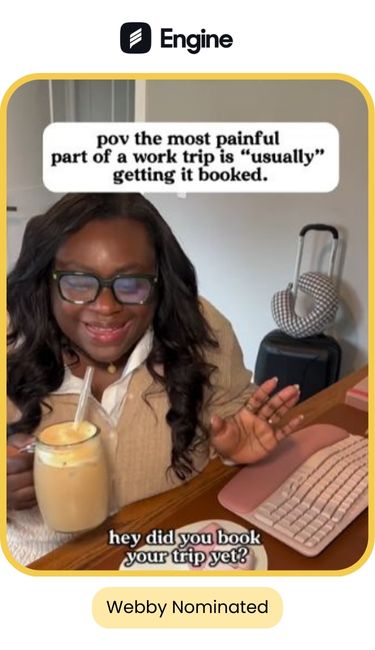

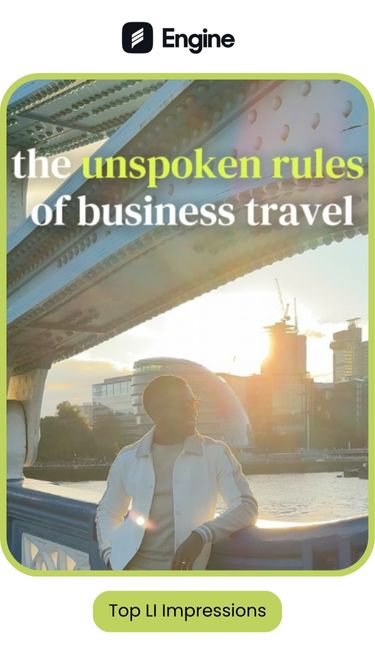
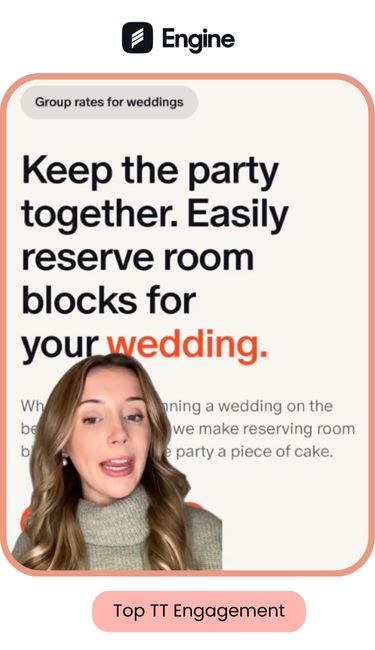
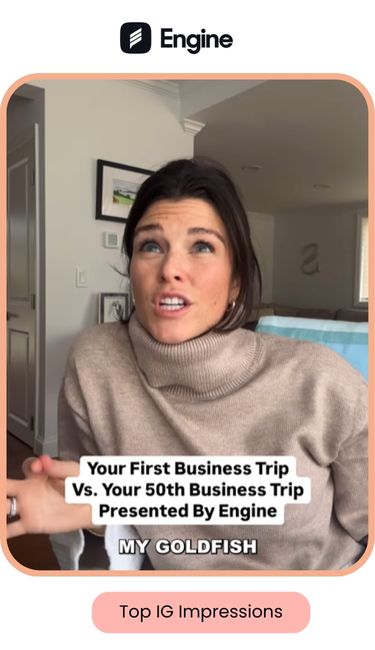
Comedic storytelling around B2B work travel woes. Skit-style vertical content boosted brand visibility and engagement across paid and organic.
This section gives you a campaign blueprint that ties directly to outcomes. No filler. Just what works.
Everything starts here. Don’t launch anything until you answer:
Are we building awareness, driving consideration, or converting leads?
You don’t need someone famous. You need someone trusted by your buyer.
Types of creators that perform in B2B:
SMEs → respected and relatable to working teams
Mid-level creators → explainers, educators, and breakdown specialists
Customer advocates → deliver trust with zero spin
Execs and employees → useful, but rarely enough on their own
What matters: audience match, content clarity, and where they sit in the buyer journey
RTB = Reason to Believe. That’s your core value prop. And each creator should anchor their content in just one.
Examples from Engine:
Creator 1 → “Stop overspending on business lodging”
Creator 2 → “Earn points for your team’s bookings”
Creator 3 → “Manage all company travel from one platform”
The content has to match the moment. Your TOFU content shouldn’t look like your BOFU content.
Don’t guess. Use organic performance to pick your paid assets.
Target:
Retargeting pools
Job title + industry lookalikes
Custom ABM audiences (via CRM match or web behavior)
Example: Engine’s Meta CPA dropped to $23 using retargeting.
LinkedIn: High-effort, high-intent. Use for bottom-funnel only.
Don’t rely on “engagement” as your north star. Track to funnel fit:
Top: Impressions, saves, watch time
Mid: Clicks, CTR, LP views
Bottom: Sign-ups, demo requests, MQLs/SQLs
Are your creators matched to your ICP and funnel stage?
Is every post built around one message?
Are your formats native to the platform and moment?
Have you tested content before scaling it with paid?
Can you tie creator content to pipeline movement?
Do your KPIs measure action, not just exposure?
The world of influencer marketing, while highly effective, can feel overwhelming, especially if you’re new to the party. Enter: B2B influencer marketing agencies. If you’re new to running B2B influencer marketing campaigns, it might make sense to enlist an agency to help you get the job done. We’re exposed to B2C influencer campaigns all the time in our personal social media scrolling, but unless you’re out looking for B2B campaigns, they’re likely less familiar.
Working with a full-service agency like The Shelf can take the guesswork out of your campaign. Whether you’d like an agency to streamline your entire strategy and build the campaign from the ground up or help with specific deliverables along the way, partnering with agencies can be a worthwhile investment.
B2B influencer marketing agencies can help you save time and money searching for, selecting, and vetting influencers. Plus, they can manage your campaigns, and your expectations, from start to finish with their expertise and data-driven insights. Agencies also already have all the legal contracts, campaign templates, and administrative needs down pat, so you don’t have to sweat the small stuff throughout the campaign.
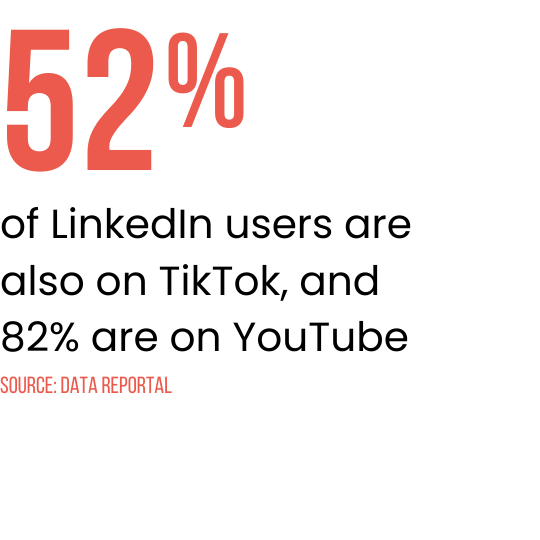
The best platform for your B2B influencer marketing campaign will depend on your campaign goals. More than likely, you’ll want to use a cross-functional approach that spans multiple platforms and cross-posting. Instagram, Facebook, Twitter, and LinkedIn are good options for awareness and brand recognition campaigns.
Respected blogs or YouTube channels from industry leaders can also provide the appropriate platform for your campaign. Longer form content like blogs and vlogs can be reshared across your brand’s and the influencer’s social portfolios to increase reach.
Your brand’s website or email list is also an effective platform for B2B influencer marketing. As we discussed earlier, most B2B buyers will be perusing your site and content before making a purchase decision, so it makes sense to serve them the content where you know they’ll be looking. Guest posts and blogs from industry experts can be a great way to build trust and credibility while housing content on your site.
Look for platforms that are most conducive to sharing the content you’d like to include in your campaign. Webinars, social media, and blogs are the most popular forms of B2B influencer marketing, with more than 70 percent of marketers claiming each form to be their fave. Recorded video, interviews, and podcasts are the second most popular suite of content types, with more than 50 percent of marketers preferring these forms.
Whatever content you choose, partnering with a B2B influencer marketing agency is a great way to ensure you’re maximizing all potential platforms to get the most impressive results from your campaign.
B2B influencer marketing is a marathon, not a sprint. The big flashy numbers like social engagement and audience size that might make an influencer a good fit for a B2C campaign, may not deliver the same results for a B2B one. It is more important for your B2B influencer to have a relevant audience than a large one. Look first and foremost for influencers who share your brand values.
The best B2B influencers are known and trusted figures in your industry. They could be thought leaders, public speakers, executives, authors, educators, or expert bloggers and vloggers. Anyone who truly knows their stuff and is a champion of your brand is a contender — including your satisfied customers. When you’re searching for these leaders, don’t forget to look in-house. 65 percent of B2B brands say their internal executives have efficiently increased the influence of their brand. Your perfect B2B influencer may be in the office down the hall!
Marketers say they partner with the following B2B influencers:
Remember to look for B2B influencers with a relevant audience, expertise, and aligned values. Your influencers will also need to be publicly viewed as trustworthy and be able to create the content you need for your campaign. A robust social presence with a sizable audience is a plus, but not mandatory, especially if you’ll be repurposing the content on your brand’s site and social channels.
We can talk about the ins and outs of B2B influencer marketing all day, but one of the best ways to learn what works is to see examples of other successful campaigns in action. Let’s explore some B2B influencer marketing examples to get those wheels turning.






RefrigiWear tapped The Shelf to outfit the toughest workers in the coldest conditions—and we delivered a blue-collar campaign that packed a performance punch. From farmers to heavy machinery operators, our creators produced 123+ pieces of content that captured RefrigiWear in action, "keeping our workforce warm."


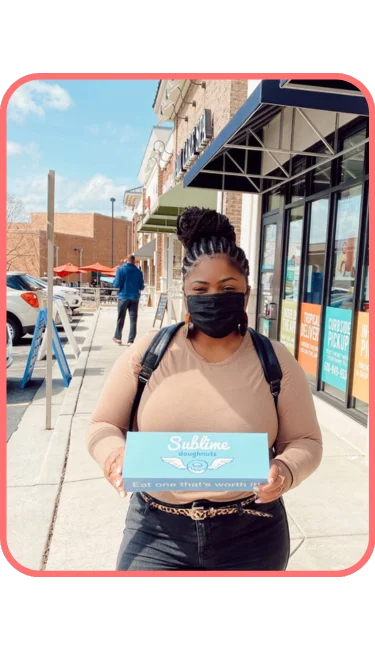
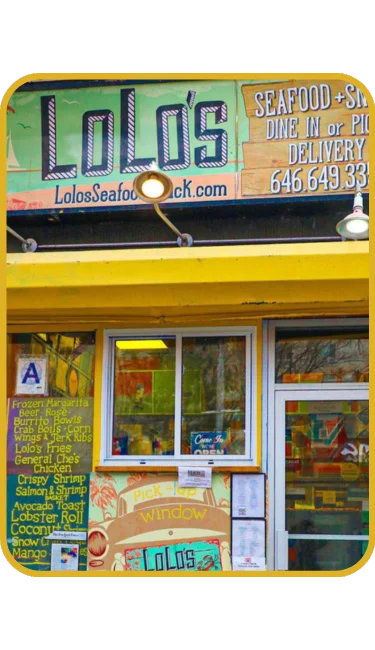
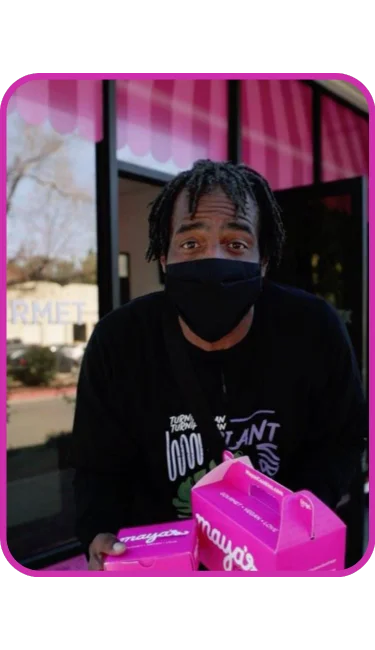
This B2B influencer campaign spotlighted a new platform feature using hyper-local content from creators across major U.S. markets. Each influencer created a personalized collection of underrepresented businesses, demonstrating how the tool could be used in real life. The result? Increased feature adoption and real clicks that drove users deeper into the product experience.
I hope this helped answer all your burning questions on how to make waves with B2B influencer marketing. If you’d like even more background, check out our previous post Why Influencers May Be the Solution to Your B2B Marketing Problem. Remember B2B influencer marketing can help you get B4YB (bang for your buck)!
If you’re in the market to start your own B2B influencer marketing campaign, you’re in the right place. Schedule a strategy call with one of our influencer marketing experts and we’ll help you create a B2B campaign that will make your enemies jealous and customers overjoyed.
We pulled together a nice, tidy rabbit hole for you on related topics that will make you an expert at this whole B2B Influencer Marketing thing. #yw
There is a categorization mistake quietly costing brands real money: too many teams treat their…
Recognized alongside LinkedIn and Ogilvy for excellence in social innovation and performance-driven influencer marketing. April…
Influencer partnerships are an effective method for boosting brand awareness and driving action among your…

The most effective influencer marketing campaigns may differ in many ways, but they also share…

Let’s Build a Smarter B2B Influence Strategy.
The best B2B brands aren’t waiting for decision-makers to stumble upon their content. They’re showing up in the conversations that matter most.